 Written by Praise Dumi Dhlakama
Zimbabwe sports betting writer
Published 27 October 2026
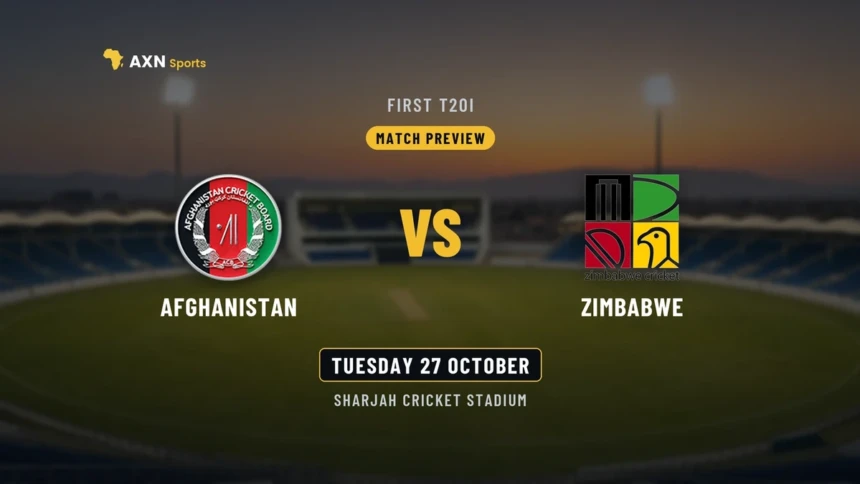
Zimbabwe must rediscover their fighting spirit in the T20 format after another bruising ODI defeat, but a daunting record against Afghanistan underlines the scale of the challenge. The three-match T20I series starts in Sharjah on Tuesday.
Zimbabwe turn their attention to T20 international cricket on Tuesday as they begin a three-match series against Afghanistan in Sharjah, hoping to put their disappointing ODI tri-series campaign behind them and restore confidence against one of their most difficult opponents.
The Chevrons enter the series needing a response after Afghanistan thrashed them by 158 runs in the ODI tri-series on 19 October, exposing familiar weaknesses with the bat. Afghanistan went on to win the tri-series final against Zimbabwe, extending their recent dominance over the Chevrons.
More than one defeat
For Zimbabwe, the concern stretches beyond one defeat. For a country with Test status and a proud cricketing history, such results are difficult to accept. Zimbabwe must find ways to close the gap against Afghanistan rather than allow each encounter to reinforce the perception that the Chevrons are second best.
T20 cricket offers a chance to reset
However, the switch to the shortest format offers Zimbabwe an opportunity to start afresh. T20 cricket places a premium on power-hitting, adaptability, disciplined bowling and the ability to seize key moments, meaning the ODI results need not dictate the outcome of this series.
Captain Sikandar Raza will be central to Zimbabwe’s response. His experience and all-round ability will be important as the team look to improve their batting intent while maintaining control with the ball. Brian Bennett, Ryan Burl and Wessly Madhevere are among the players Zimbabwe will hope can provide the runs and momentum needed to challenge Afghanistan.
Batting and bowling must improve
The bowling attack, featuring Blessing Muzarabani and supported by the available pace and spin options, will also need to deliver a more consistent performance. Zimbabwe cannot afford to give Afghanistan’s batters easy scoring opportunities, particularly during the powerplay and at the death.
Afghanistan, meanwhile, bring considerable confidence into the contest. Their T20 squad includes captain Ibrahim Zadran, explosive wicketkeeper-batter Rahmanullah Gurbaz, all-rounder Azmatullah Omarzai and an imposing spin contingent featuring Rashid Khan, Noor Ahmad and Mujeeb Ur Rahman.
Zimbabwe’s task will be to counter that variety with better decision-making, sharper fielding and a batting approach that balances aggression with responsibility. Early wickets could put pressure on Afghanistan, but Zimbabwe must also be prepared to build partnerships rather than rely on individual brilliance.
History favours Afghanistan
The broader T20I head-to-head record makes for sobering reading: Afghanistan have won 19 of the teams’ 21 meetings, and they also won the last five encounters between the sides.
That history makes Tuesday’s opener more than just the first match of a new series. It is an opportunity for Zimbabwe to demonstrate that they can learn from setbacks, compete with greater consistency and challenge Afghanistan on their own terms.
The Chevrons need a response
The first T20I takes place at the Sharjah Cricket Stadium on Tuesday, 27 October, with the second match scheduled for Thursday, 29 October, and the final encounter on Sunday, 1 November.
Zimbabwe do not need to erase years of disappointment in one match, but they do need to show tangible progress. A competitive performance, built on disciplined bowling and purposeful batting, would be an important first step. After the ODI disappointment, the Chevrons have a chance to respond on the field and begin changing a record that has weighed heavily on this rivalry.