 Reviewed by Peris Wambu
Kenya sports betting writer
Published 8 September 2026
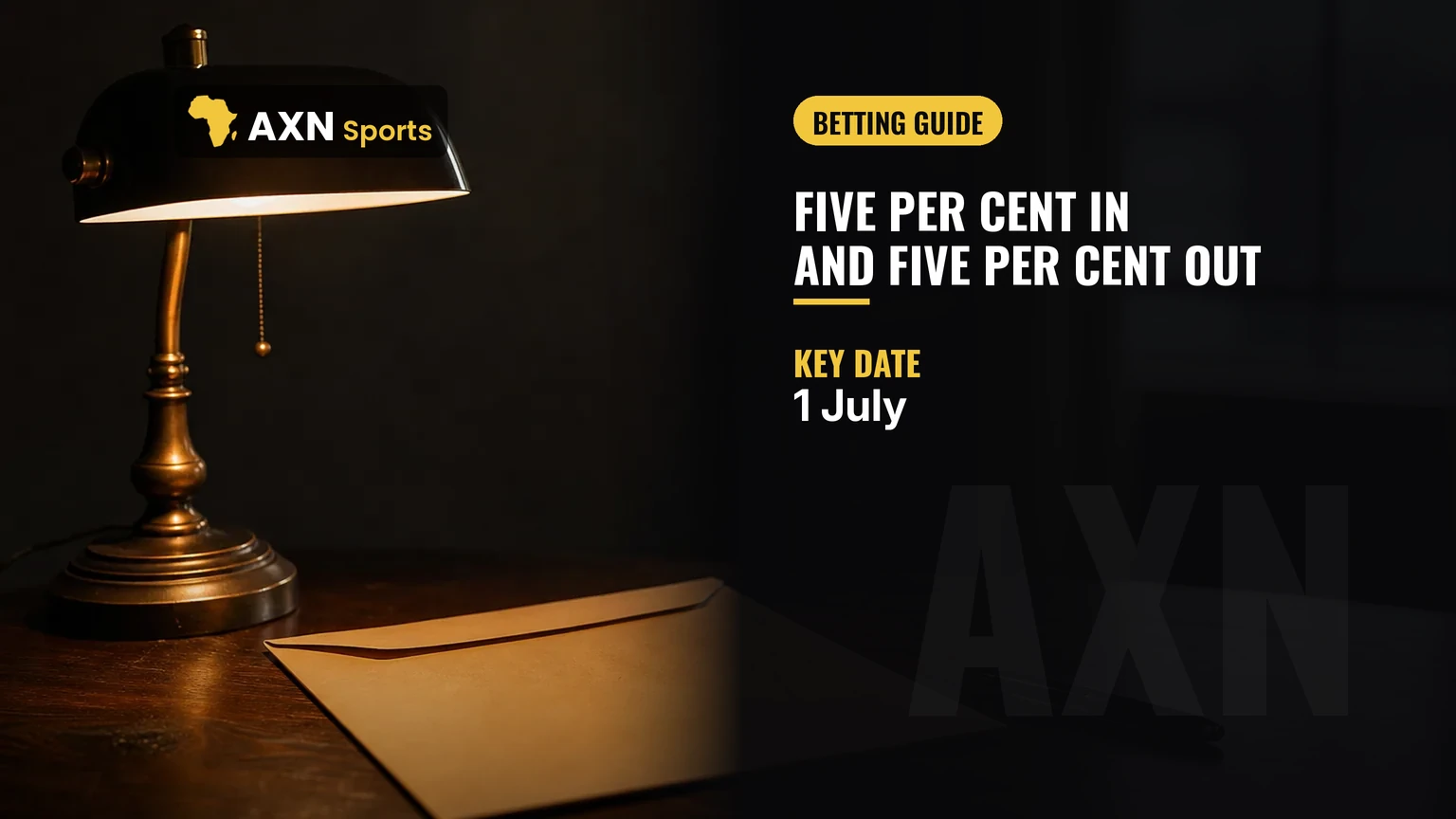
Kenya taxes a bet twice and neither charge is on your winnings: five per cent excise duty is taken when you deposit, and five per cent withholding tax is taken when you withdraw.
Both rates come from the Finance Act 2025, which was signed on 26 June 2025 and took effect on 1 July that year. The Act did two things at once. It cut excise duty on betting from fifteen per cent to five, and it moved the charge from the amount staked to the amount deposited into your betting wallet. It also replaced the twenty per cent withholding tax on net winnings with a five per cent charge on withdrawals.
What that means in practice
Deposit KSh 1,000 and KSh 50 goes to excise duty, so KSh 950 reaches your account. That happens whether you place a bet or not. Withdraw KSh 1,000 and KSh 50 goes to withholding tax, so KSh 950 reaches your M-Pesa or Airtel Money. That happens whether the money came from a winning bet or from your own unspent deposit.
The operator deducts both and remits them, so nothing lands on your personal tax return. The withholding tax is a final tax, which is the technical way of saying you do not declare betting withdrawals as income later in the year.
Why the change matters to how you stake
Under the old rules a bettor who lost paid excise on the stake and nothing else, while a bettor who won handed over a fifth of the net winnings. Under the current rules the charge falls on movement of money rather than on outcome, so the person who deposits often and withdraws often pays the most, and the person who leaves a balance in the account and stakes from it pays the least. Two bettors with identical results can therefore hand over very different amounts.
Lawyers reading the Act have flagged the same oddity from the other direction: excise duty now applies before any bet is placed, and withholding tax applies to a withdrawal that may contain no winnings at all. That is a live question about the design of the charge rather than about how it is collected today.
Where to bet: Kenyan football is priced in shillings by licensed operators such as SportPesa and Betika, both regulated in Kenya, where the Gambling Regulatory Authority took over from the Betting Control and Licensing Board in 2025, funded by M-Pesa and Airtel Money. Because the two charges fall on deposits and withdrawals, the size and frequency of your transfers matter as much as the price you take, so fewer and larger movements cost less than many small ones. Compare the same market at two books before you stake. Our guide to the best betting sites in Kenya covers licensing and payout times, and there is more in Kenya betting guides from AXN Sports. 18+. Gamble responsibly.